
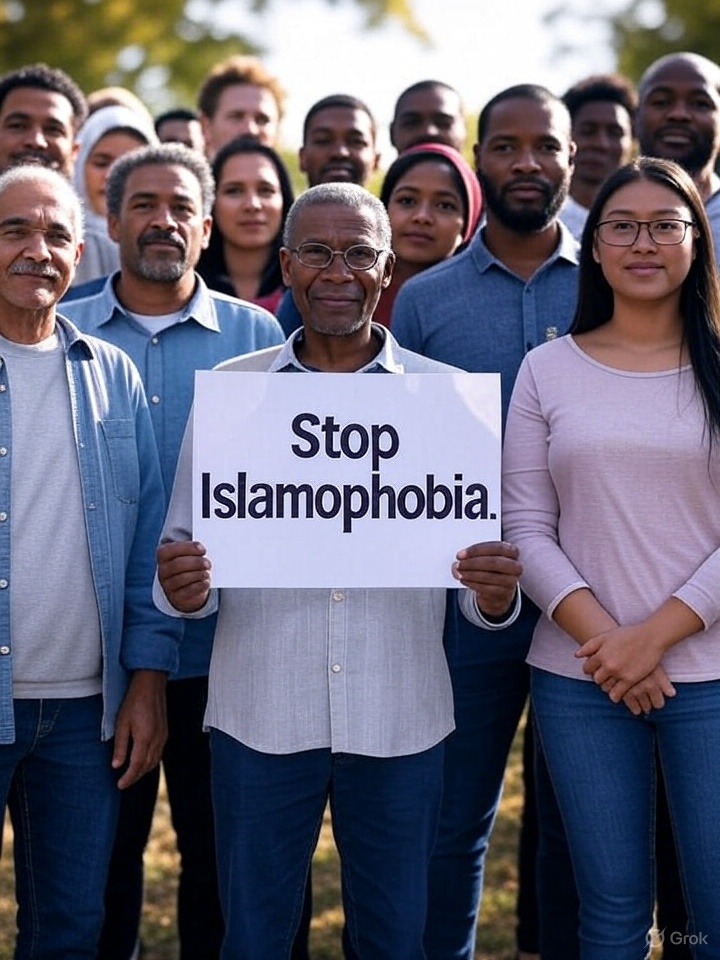
Islamophobia is not merely a religious issue; it also concerns social stability, international relations, and human rights protection.
By Bi Yantao
Islamophobia refers to an irrational fear, prejudice, and hostility toward Islam and Muslim communities, often accompanied by discrimination, stigmatization, and even acts of violence.
I. Causes of Islamophobia
All social prejudices have historical roots and contemporary triggers, and Islamophobia is no exception. It is shaped by both historical narratives and propelled by real-world events and media mechanisms.
Historical and Geopolitical Inertia
From the Crusades to colonial expansion, and then to localized conflicts in the post-Cold War era, Western societies have long been framed by narratives of “civilizational clash.” These historical memories are continuously evoked in media and political discourse, leading some to attribute contemporary conflicts partly to religious differences.
Impact of Terrorist Attacks
The 9/11 attacks in 2001 and subsequent terrorist incidents entrenched the stereotype “Islam = terrorism” in parts of society. Although terrorism is the act of a tiny minority of extremists, this has been generalized to label the entire Islamic faith.
Amplification by Media and Politics
Certain media outlets, driven by the need to attract attention, focus on violent conflicts and neglect the cultural and social diversity of Islam. Some politicians exploit “othering” strategies by portraying Muslim groups as security threats to gain votes or divert domestic tensions.
Social Psychology and Economic Pressure
During economic downturns and tight labor markets, immigrants and minority groups often become scapegoats. Social media algorithms further amplify the echo chamber effect of hate and fear.
Entrenched Class and Ideological Biases
Some individuals hold prejudices mixing cultural estrangement, value rejection, and emotional reactions toward Islam and Muslims. Once these fixed biases form, they subtly influence daily interactions, public opinion, and policy orientations.
II. Why Should We Combat Islamophobia?
If Islamophobia is allowed to fester, it harms individuals and shakes the foundations of social and international order.
Protecting Human Rights and Legal Dignity
At its core, Islamophobia is religious discrimination that directly violates freedom of belief and equality rights. Stigmatizing any religious group undermines the foundation of a rule-of-law society.
Safeguarding Social Stability and National Security
Sustained hostility leads to social fragmentation, increases risks of hate crimes, and can push marginalized groups toward radicalization. Combating Islamophobia helps break the cycle of violence and fundamentally reduces security threats.
Promoting International Relations and Cultural Exchange
With over two billion Muslims globally across continents, any country branded with systemic discrimination against Muslims will pay a price in diplomacy, trade, tourism, and cultural exchange.
Advancing Correct Perceptions and Media Environment
Removing the stereotype of “Islam = threat” helps the public understand Islamic civilization from a comprehensive perspective and encourages balanced media narratives.
III. How to Combat Islamophobia?
Combating Islamophobia is not a task achieved overnight; it requires a long-term effort combining law, education, communication, and social participation.
Improving Laws and Systems
Enhance anti-discrimination legislation by including hate speech and hate crimes targeting religious groups in the legal framework. Encourage cooperation among governments, media, and NGOs to establish monitoring and rapid response mechanisms.
Strengthening Education and Cultural Exchange
Introduce more content about Islamic history, culture, and social contributions into educational curricula and public media. Promote interfaith and intercultural dialogue programs to reduce unfamiliarity and misunderstandings.
Enhancing Media and Communication Strategies
Advocate balanced reporting, avoiding the representation of an entire religious group by isolated extremist incidents; highlight the diversity and constructive roles of Muslim societies in international communication.
Adhering to Long-Term and Sustained Principles
Combating Islamophobia is a long-term social project requiring perseverance. Pursuing quick fixes or short-term image projects may backfire.
Conclusion
Combating Islamophobia is not about seeking “special treatment” for a religious group but about upholding the shared dignity and security of human society. Only in an environment of rule of law, justice, and inclusion can different civilizations and beliefs truly coexist in peace.
The United Nations General Assembly adopted a resolution in 2022, designating March 15 as the “International Day to Combat Islamophobia.” UN Secretary-General António Guterres emphasized that disturbing levels of anti-Muslim prejudice are rising worldwide and called on everyone to speak out against bias, hatred, and discrimination.
Postscript:
This is my first public commentary on Islam. I will continue to share my views on related topics in the future.
Bi Yantao, Professor at the School of International Communication and Arts, Hainan University; Editor-in-Chief of Communication Without Borders; Senior Researcher at the Chahar Institute.