This article examines how four decades of quiet service by the “Lei Feng Brother of Hainan” embody an ethic of devotion comparable to that associated with Mother Teresa.
By Bi Yantao (毕研韬)
Editor-in-Chief, Communication Without Borders (CWB) 《无界传播》总编辑
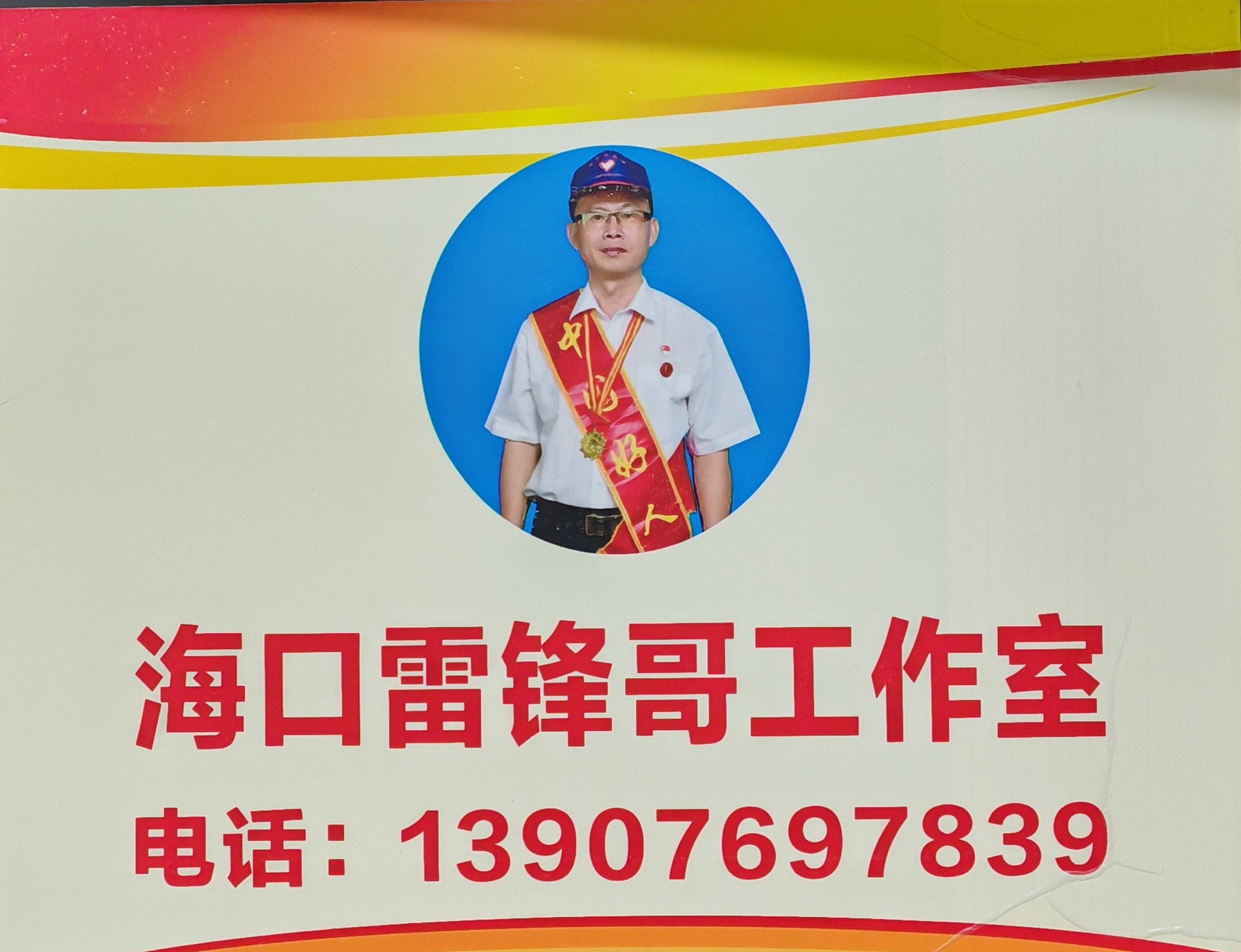
In global narratives of philanthropy, Mother Teresa is not remembered for grand institutional engineering, but for a sustained, low-profile ethic of service directed toward the most vulnerable. Her legacy lies in persistence rather than spectacle, and in compassion practiced quietly over time. This ethical orientation toward public good is not unique to the Western world. In China’s Hainan Province, an ordinary citizen known locally as the “Lei Feng Brother of Hainan” has, through four decades of consistent action, embodied a comparable path of service that merits broader international attention.
The individual, whose real name is Liu Yufeng(刘育峰), was born in January 1963 in Hainan. Since 1986, he has consciously followed what is commonly referred to in China as the “Lei Feng spirit”—a moral framework emphasizing altruism, voluntary service, social responsibility, and everyday assistance to others without expectation of recognition or reward. Rather than being driven by single events or temporary campaigns, his engagement reflects a long-term commitment that treats public service as a stable way of life.
In 2004, Liu inherited his father’s professional legacy in traditional Chinese medicine. Guided by a compassion-centered ethos, he systematically acquired skills in rehabilitation therapy and physical care, gradually integrating professional medical knowledge into his volunteer work. Through this process, moral intention was translated into sustainable and replicable service capacity, allowing his goodwill to generate concrete and enduring social outcomes.
Over the past forty years, his public service activities have spanned medical assistance, emergency response, long-term support for vulnerable groups, psychological care, volunteer organization, public communication, and sports education. To date, he has provided emergency aid to 15 individuals who collapsed suddenly in public spaces, using first-aid measures and traditional Chinese medical techniques to secure critical time for further treatment. Through long-term free medical consultations, community health services, and individualized assistance, he has supported more than 70,000 people, including persons with disabilities, low-income families, disadvantaged children, and those suffering from prolonged illness.
His practice is not characterized by one-off interventions. For certain beneficiaries, Liu has maintained long-term home visits, providing both physical rehabilitation and psychological support to help them regain confidence and rebuild social connections. His personal financial contributions to public welfare have exceeded RMB 690,000 (approximately USD 95,000), primarily used for medical supplies, basic support, and sustained assistance. This sustained personal investment gives his work a notable degree of precision: resources are not dispersed symbolically, but directed toward real needs over extended periods.
Importantly, Liu has never framed himself as an isolated moral exemplar. Since 2013, he has actively organized volunteers into a regularized service structure, transforming individual action into a community-based public welfare network. He also uses social media platforms to share public health knowledge and service-oriented values in accessible language, reinforcing the idea that ethical action need not be extraordinary, but can be integrated into everyday life.
It is in this sense that his work resonates across cultures with the ethic associated with Mother Teresa. Neither relies on grand narratives or institutional scale to establish legitimacy. Instead, both cultivate public trust through time, concrete service, and sustained respect for individual dignity. The difference lies in context. In Hainan, this ethic of service is embedded in local social relations and the tradition of Chinese medicine, giving it distinct regional characteristics and contemporary relevance.
From an international communication perspective, the significance of the “Lei Feng Brother of Hainan” extends beyond personal morality. His experience points to a replicable social model in which individual initiative, professional skill, and community organization converge. If such practices continue to be supported and understood at the institutional level, they can benefit people across national, cultural, and religious boundaries, making public welfare an integral component of the social ecology of the Hainan Free Trade Port.
When goodwill is not constrained by identity, and when service is centered on human dignity and well-being, concepts such as livability, workability, and social inclusion cease to be abstract policy indicators. They become tangible, lived experiences. From this perspective, envisioning the Hainan Free Trade Port as a globally oriented “island of public good” is not an idealized slogan, but a path already tested in practice and worthy of further expansion.