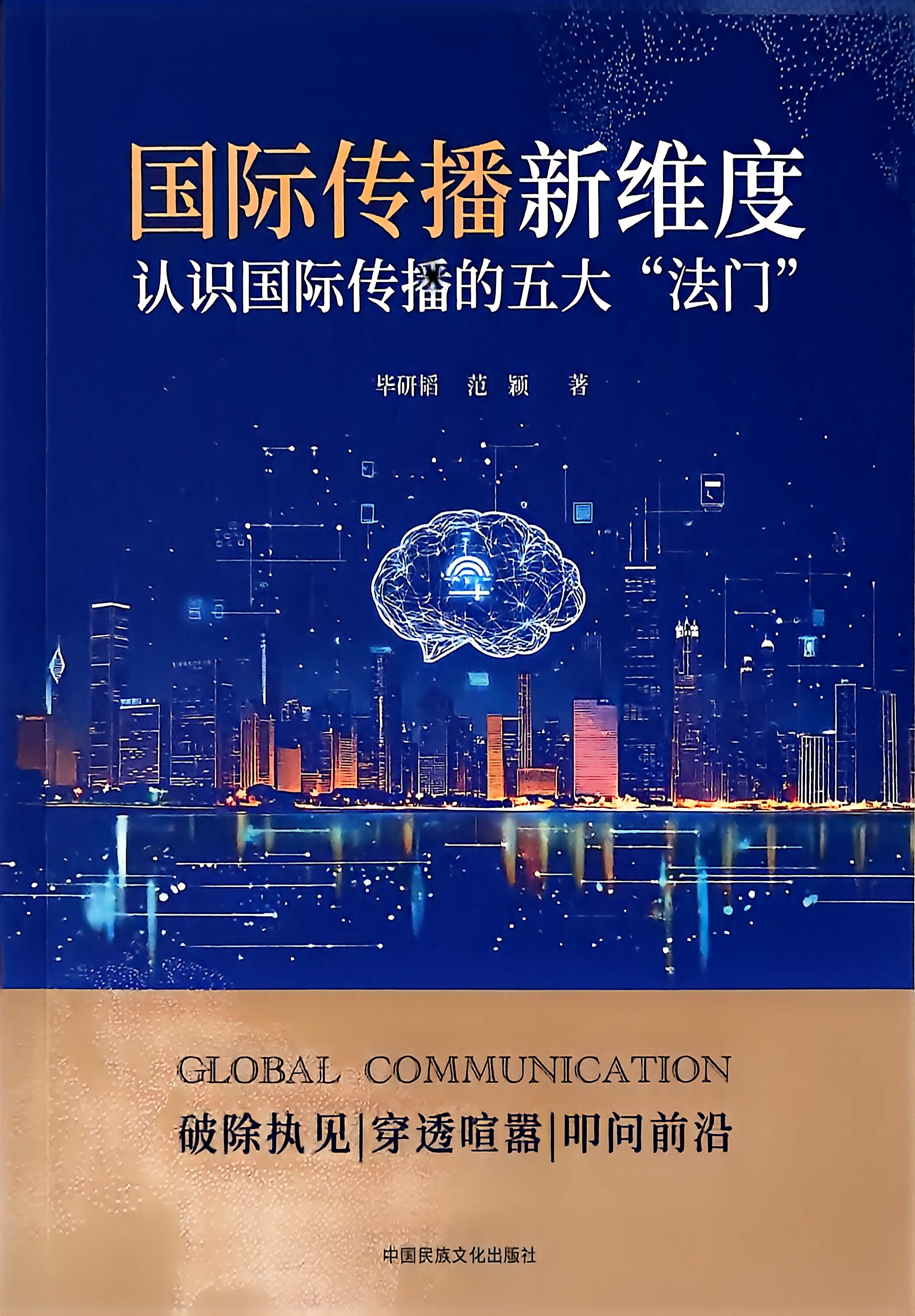

The success or failure of China’s international communication hinges on the cognitive level of its decision-makers.
By Bi Yantao
Amid continuous adjustments in the global landscape and the increasing fragmentation of information flows, international communication is no longer simply about “making our voice heard.” It concerns the capacity to influence other countries’ perceptions, shape external understanding, and reduce the risk of misjudgment.
Many attribute unsatisfactory outcomes in international communication to insufficient platforms, technological shortcomings, or weak execution. However, what ultimately determines the upper limit is not the executive level, but the decision-making level. The cognitive horizon of decision-makers constitutes the “ceiling” of international communication capability.
I. The Core of International Communication Lies Not in “What to Say,” but in “How to Judge”
International communication is not mere information dissemination. It requires systematic design concerning issue selection, framing, audience psychology, and the structure of global public opinion.
If decision-makers cannot accurately assess what the external world cares about, how China is interpreted, and where cognitive gaps exist, then regardless of resource input, communication efforts may generate substantial noise but limited impact.
In many cases, the problem is not insufficient effort, but flawed judgment. Judgment errors stem from cognitive structures, and cognitive structures are shaped by sources of information.
II. The Problem Lies in Whom Decision-Makers Listen To
In a highly complex international environment, decision-makers cannot rely solely on personal experience to comprehend the full structure of global public opinion. Their cognition necessarily depends on experts. Yet in practice, those who most influence decision-making are not always those with the most rigorous research credentials.
In some contexts, individuals with higher administrative rank, more prestigious titles, or greater public visibility are more likely to be invited to endorse events or participate in discussions. Administrative bodies may implicitly assume that higher position equates to higher competence, and prominent titles equate to authoritative judgment.
However, international communication is a highly specialized field. Scholars who have long studied overseas communication structures, tracked public opinion data, and analyzed cross-cultural differences may not hold prominent administrative posts. Indeed, those engaged in sustained empirical research are often ordinary professors or researchers.
If administrative rank is conflated with professional expertise, decision-making cognition may rest on symbolic authority rather than empirical analysis.
III. Experts as “Endorsement Resources,” Not “Judgment Resources”
At local levels, for reasons of publicity or protocol, experts are often invited to elevate the status or image of events. This practice is not inherently inappropriate. The problem arises when symbolic endorsement is equated with substantive professional validation.
Endorsement addresses form; deliberation addresses cognition.
If expert participation is merely symbolic and substantive research insights fail to enter the decision-making core, the communication system may exhibit a structural phenomenon: numerous activities, frequent forums, considerable media coverage, yet limited improvement in international perception.
This is not an execution problem, but an access problem—who is genuinely able to influence decisions.
IV. Genuine Experts Rarely “Speak to Please”
Scholars engaged in long-term empirical research tend to emphasize uncertainty, highlight latent risks, and caution against potential misreadings. They may not provide simple affirmative answers, nor are they inclined to cater to emotional expectations.
Yet this prudence constitutes the foundation of decision security.
If institutional environments are more receptive to affirmative narratives and less tolerant of risk warnings, alternative perspectives may gradually disappear from the decision-making process. Short-term stability may be achieved, but long-term risks of misjudgment may accumulate.
International communication involves national image and strategic interests. The cost of a major misjudgment often far exceeds that of an ineffective event. Whether decision-makers can hear authentic, professional—even uncomfortable—opinions is central to the quality of cognition.
V. The Fundamental Path to Improving International Communication: Bringing Real Experts into the Core
Enhancing international communication capacity is not primarily about increasing budgets or expanding platforms. It is about reforming how experts enter the decision-making system.
First, experts participating in major decisions should be selected based on research output and professional competence, rather than administrative status or titles.
Second, major communication strategies should undergo independent and substantive expert review prior to adoption, rather than symbolic consultation.
Third, communication outcomes should be evaluated against prior expert recommendations, making judgment accuracy a long-term metric of assessment.
When those who genuinely study overseas public opinion and understand cross-cultural structures possess stable channels of influence, the cognitive framework of decision-makers will naturally become more comprehensive. Other issues—resource allocation, coordination mechanisms, data evaluation—will then be easier to resolve.
If this core issue remains unaddressed, international communication may remain confined to the level of expression, rather than advancing to the level of cognition.
VI. Conclusion
The essence of international communication is not competition in expressive capacity, but competition in cognitive quality.
Whom decision-makers listen to determines the boundaries of cognition; the boundaries of cognition determine the upper limit of international communication.
Only when institutional arrangements enable those who truly understand international communication to enter the core of decision-making will substantive improvement occur. Otherwise, regardless of resource investment, efforts may merely circulate within pre-existing cognitive frameworks.
Bi Yantao is Professor at the School of International Communication and Art, Hainan University, and Senior Research Fellow at the Charhar Institute.