——Breaking Cognitive Shackles for a New Future
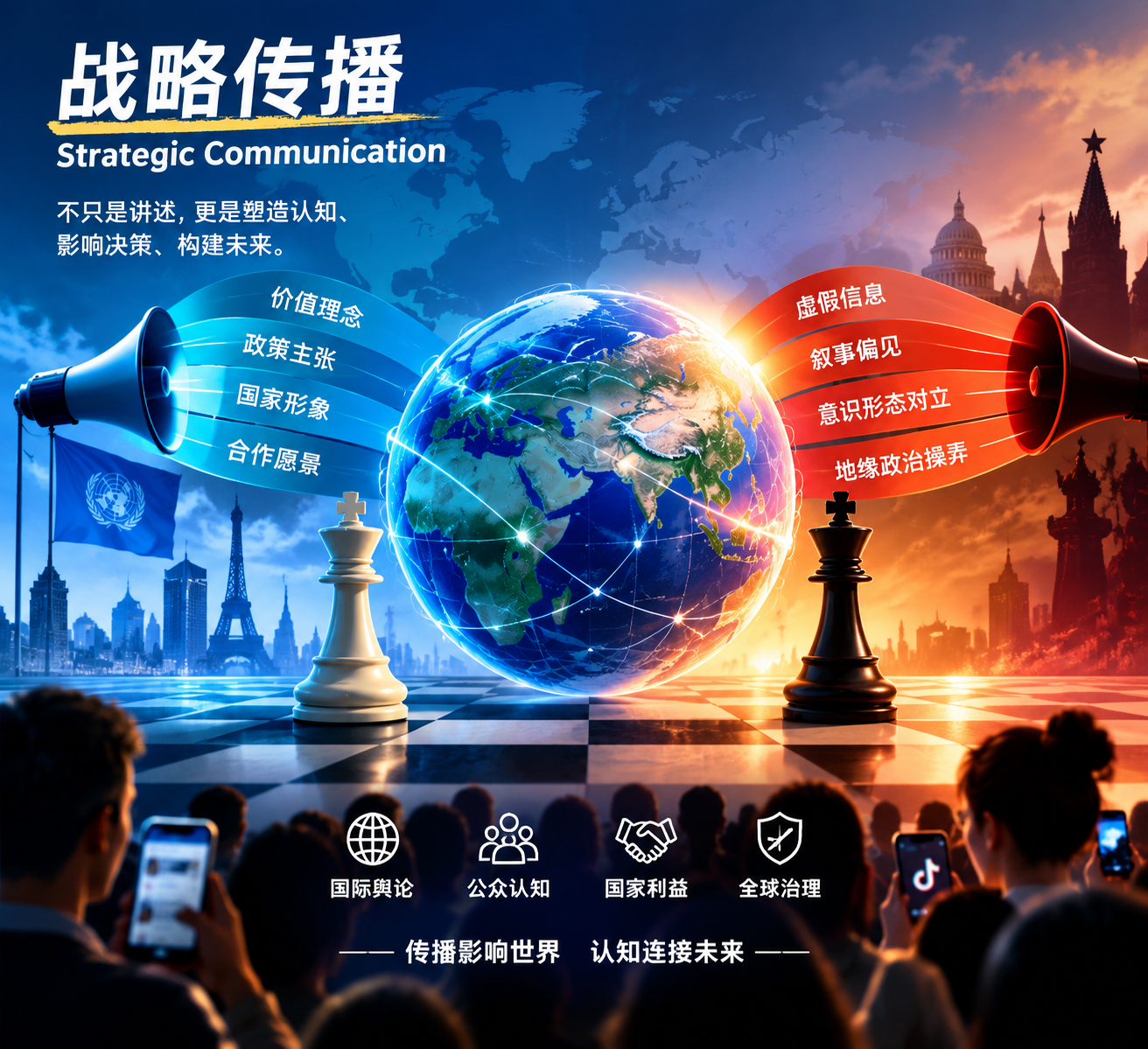
Whether within a single country, between nations, or across civilizations, division and conflict threaten human survival and well-being, bringing distress, suffering, and sacrifice. How did we get here? In my view, cognitive differences and conflicts of interest are the two key factors. Cognitive divergences trigger and exacerbate conflicts of interest, which is why various global forces spare no effort in shaping public perception.
Different observers perceive the same phenomenon differently, sometimes even in stark opposition, because everyone interprets their surroundings through their own cognitive framework. These frameworks, which we can call “borders,” form a complex system encompassing intangible identities (such as nationality, race, ethnicity, gender, status, profession, political affiliation, and religious beliefs), vested interests, established knowledge, personal experiences, policies, laws, traditions, social atmosphere, individual character, and external influences. When certain factors become highly active—such as extreme sensitivity to one’s nationality—they can distort perception, and the deeper the obsession, the stronger the illusion.
How to Break the Deadlock?
In the post-truth era, traditional education and propaganda are increasingly ineffective, as people instinctively reject information they dislike. Given constant external interventions, change is only possible when individuals realize that their cognitive frameworks hinder their access to truth—when they acknowledge that everyone is a “frog in a well,” traveling with their own confined perspective. As stated in the Platform Sutra of the Sixth Patriarch, “One truth is all truths,” and in the Diamond Sutra, “One should give rise to a mind that does not abide anywhere.” Similarly, in his song It’s Now, Dao Lang sings, “As long as your gaze is free of tinted distinctions, your dreams and mine will shine with equal glory,” expressing the same principle.
To achieve this, Communication Without Borders (CWB) will uphold principles of truth, objectivity, diversity, and depth in reporting while actively exploring the topics we care about. We will maintain a centrist stance while welcoming perspectives from both the moderate left and moderate right. Our hope is to expand the space—both physical and virtual—for peaceful coexistence between moderates, thereby reducing the room for extreme left and extreme right ideologies. If society suppresses one side while favoring the other, balance and inclusivity will be lost, leading to societal fragmentation, economic decline, and worsening living and business environments. Internationally, geopolitics and ideological battles further complicate matters. Thus, CWB aims to present not only static information but also the underlying dynamics shaping global events.
The Link Between Domestic and International Affairs
Domestic governance is the foundation of diplomacy. A nation can only gain global influence by achieving modernization in governance, and one critical measure of this is the optimization of its information dissemination ecosystem. The volume of information flow within a region directly impact its stability and development. Moreover, the direction of information flow is key—ultimately determined by the “information gradient” between regions. Countries with lower information status must proactively elevate their standing and enhance their citizens’ information resilience to mitigate potential threats from higher-status information sources.
Since 1986, I have been exploring cross-cultural communication. After two separate study trips to Europe post-2002 to research communication studies—especially international communication—I often refer to myself as a “missionary of communication studies” or a “fire spreader.” I firmly believe that communication is a powerful tool. However, China’s communication education and research are currently overburdened and in urgent need of reform. Without immediate improvements in communication education, research, and practice, the effectiveness of national and global governance will inevitably suffer.
This is no exaggeration. As early as July 2001, the U.S. Department of Defense identified three domains of warfare: the physical, informational, and cognitive. Among these, cognitive warfare was deemed the most crucial—surpassing both physical and informational warfare. The founding of the People’s Republic of China, the United States, and the rise and fall of the Soviet Union all demonstrate the immense power of information dissemination. However, I must caution that the U.S. military’s concept of cognitive warfare applies primarily to traditional wartime contexts. If information dissemination is manipulated with a cognitive warfare mindset during peacetime, it can backfire, damaging reputations and interests in ways that may take years to repair.
The Challenge of Geopolitical Conflict
Amid escalating global geopolitical conflicts, mere information exchange is no longer sufficient. Opposing parties deploy legal, societal, informational, and cultural mechanisms to block unwanted narratives, treating external information efforts as noise or infiltration. In communication studies, “incommunicability” refers to situations where increased dialogue deepens divisions rather than bridging them. As U.S.-China strategic competition intensifies, both sides are vying for ideological dominance. Whoever upholds the core values of human civilization secures the moral high ground in communication. Thus, reconstructing and communicating values is paramount—but this must be achieved through actions and policies rather than empty rhetoric. This task extends beyond ideological politics, directly shaping geopolitics, realpolitik, and economic interests.
CWB: A Communication Experiment for Peace
Communication Without Borders (CWB) is an experimental platform in communication studies, dedicated to dismantling cognitive barriers, fostering cross-boundary dialogue, and promoting reconciliation and peace—an approach aligned with the communication paradigm of peace studies. We will strive to observe reality from the highest possible perspective, presenting diverse, even opposing, viewpoints along a balanced spectrum. We earnestly hope that all participants will approach discussions with a historical and developmental outlook, emphasizing dialogue, reconciliation, and cooperation among civilizations, while demonstrating intellectual depth and integrity.
My journey in this field is just beginning. I invite like-minded individuals worldwide to join me on CWB’s experimental platform. Together, let us explore and uncover the essence of information dissemination—and revel in its endless wonders.
Bi Yantao
Editor-in-Chief
Communication Without Borders (CWB)
February 18, 2025