By Editorial Team of Communication Without Borders(CWB)
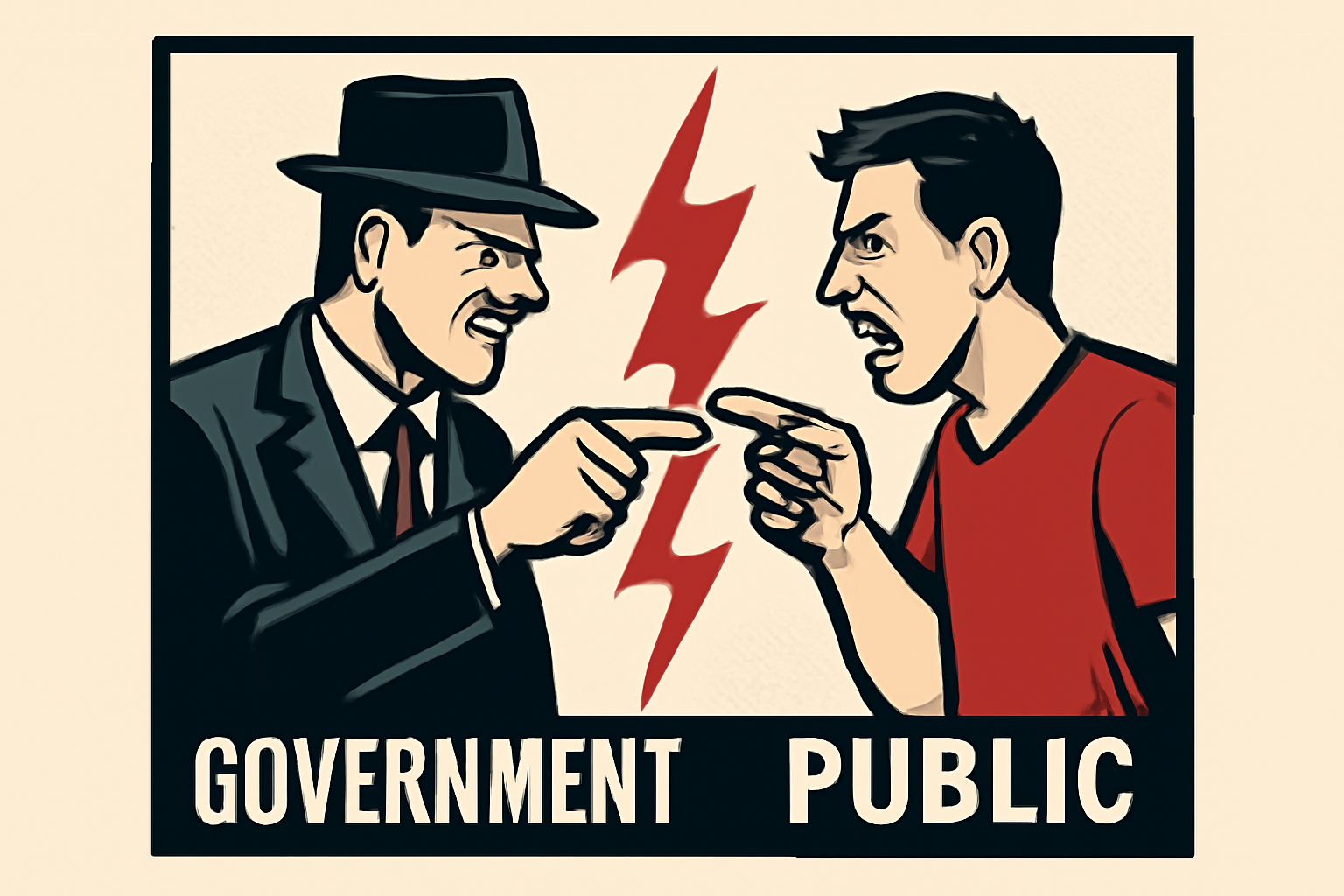
Since the publication of the first article on February 14, 2025, Communication Without Borders has been focused on improving cognitive literacy, with bridging the cognitive gap between the government and the people being one of our core objectives. We deeply recognize the crucial role that class thinking plays in social governance. In reality, many people, whether consciously or unconsciously, classify themselves into either the ruling class or the governed class, and base their thinking and actions on this cognitive framework. This solidified thinking has become a major hidden danger to social stability and development.
The Solidification of Class Thinking: Cognitive Misunderstandings Between the Ruling and the Governed Classes
The misunderstandings between the ruling and governed classes manifest in several areas:
- Misunderstanding of Power Structure
The ruling class often believes that their status and decisions are the guarantee of social order and stability. This mindset causes them to overlook the real needs and emotional appeals of the public. On the other hand, the governed class believes that the ruling class, through power, has deprived them of their rights, controlling resources, opportunities, and information, thus exacerbating social inequality and class division. This cognitive bias makes dialogue and understanding between the two groups extremely difficult. - Different Interpretations of “Social Order” and “Inequality”
The ruling class generally believes that social order is achieved through structured management and control, and that this order is crucial to social development. Ordinary citizens, however, often see this order as a systematized expression of inequality, believing that it allows a privileged few to monopolize power, resources, and information, depriving them of equal opportunities. These differing understandings of social order intensify societal conflicts. - Misunderstanding of “Citizen Rights” and “Social Responsibility”
The ruling class places more emphasis on social responsibility, believing that the public should act according to social rules and frameworks. However, the public is more concerned with their citizen rights, particularly the right to know, the right to participate, and the right to express. This cognitive gap deepens the divide in their positions on policies, social systems, and public affairs, further increasing the gap between social classes.
Breaking the Shackles of Class Thinking: The Power of Cognitive Literacy
Communication Without Borders is committed to breaking the shackles of class thinking, especially the cognitive misunderstandings between the ruling and governed classes. We believe that cognitive literacy is the key to helping individuals and groups break free from their inherent class cognition and cross class barriers. By enhancing critical thinking, open-mindedness, and cross-cultural understanding, both the public and elites can better understand each other’s perspectives, dissolving misunderstandings and prejudices.
The direction of Communication Without Borders’ work includes:
- Promoting Information Flow and Transparency
We advocate for the free flow of information and government decision-making transparency. We hope to narrow the cognitive gap between the government and the people through open information platforms, allowing the general public to fully understand policy backgrounds and eliminating the misunderstandings and mistrust caused by information asymmetry. - Facilitating Cross-Class Dialogue and Understanding
We encourage dialogue and communication between different classes, including between the ruling and governed classes. Through face-to-face or written discussions, we aim to help different social classes understand each other’s difficulties and needs, thus promoting cognitive integration and social reconciliation. - Strengthening Critical Thinking and Information Filtering Skills
In the age of information overload, we emphasize the importance of critical thinking. Through education and practice, we help the public identify the viewpoints and biases in information, enabling them to make rational, comprehensive judgments in a complex society.
Conclusion: Cognitive Awakening, Breaking Class Boundaries
One of the core goals of Communication Without Borders is to bridge the cognitive gap between the government and the people by promoting cognitive literacy and breaking the shackles of class thinking in society. We hope that through continuous education and advocacy, we can help individuals and groups transcend their inherent cognitive frameworks, reexamine their social roles, eliminate misunderstandings and conflicts between classes, and ultimately build a more harmonious and fair society.
When both the ruling and governed classes can transcend their entrenched class thinking, cross class and cultural boundaries, and collectively understand the complexity of social issues, society will move towards a more inclusive, understanding, and cooperative direction. We believe that cognitive awakening is not only essential for individual literacy improvement but is also a key force in driving social progress and world peace.