
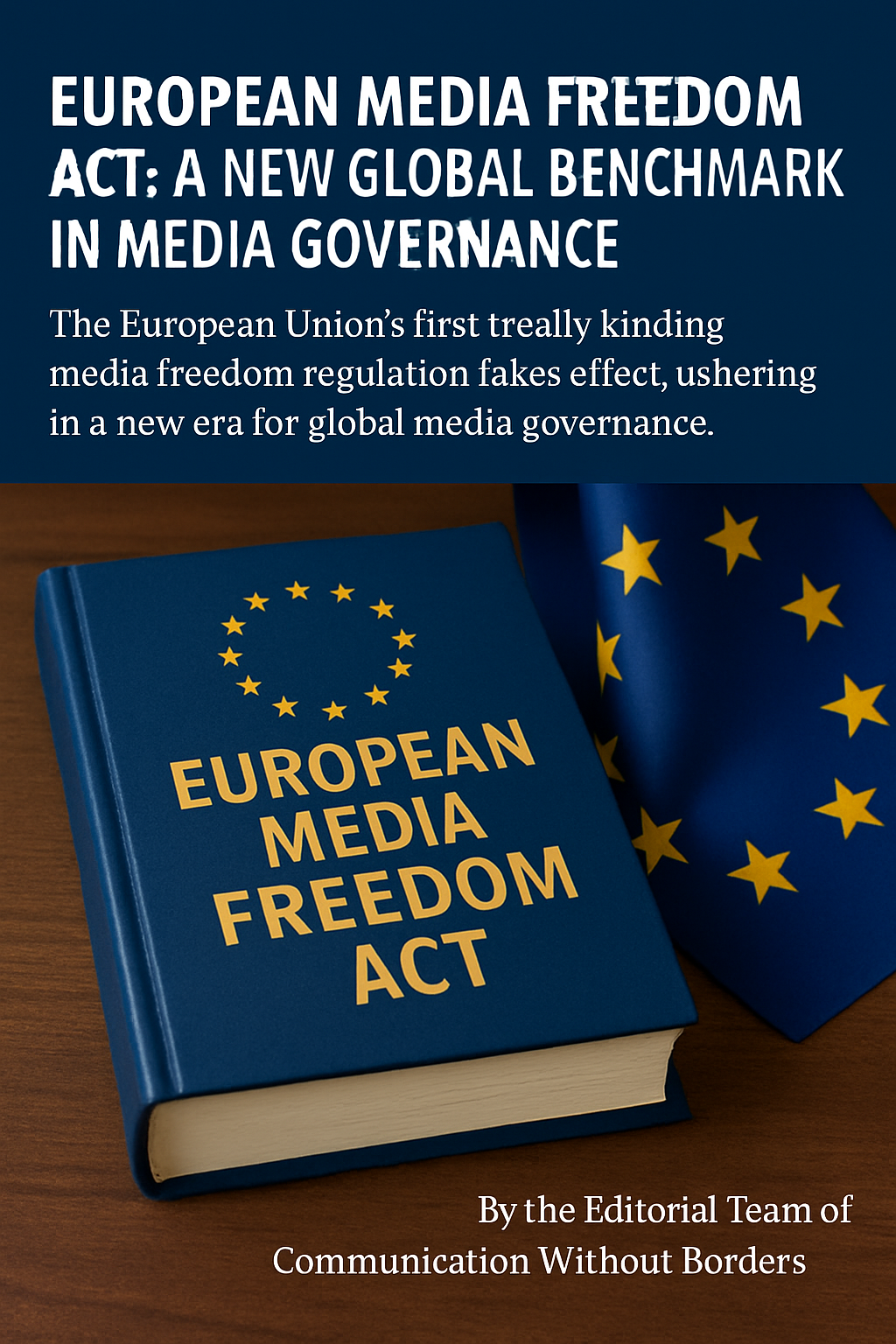
The European Union’s first legally binding media freedom regulation takes effect, ushering in a new era for global media governance.
By the Editorial Team of Communication Without Borders
On August 8, 2025, the European Union made history by introducing its first legally binding media freedom regulation — the European Media Freedom Act (EMFA). This marks a major breakthrough in European media governance and injects a strong impetus globally, especially for Asia’s complex and diverse media ecosystem.
What sets EMFA apart is its elevation of media freedom from “soft governance” to robust legal protection. It explicitly restricts political and commercial interference in news editing, promotes transparency in media ownership, and establishes a transnational supervisory body to ensure effective enforcement. This regulation essentially equips European media with a “bulletproof vest,” enabling them to steadfastly defend independence and pluralism amid digital upheavals and political storms.
For Asia, EMFA is not only a legal model but also a catalyst for change. Asia’s media landscape is intricate, with vibrant yet challenging spaces for free expression. EMFA offers a vivid example of how rule of law can safeguard media freedom, promote transparency, and foster diverse voices — all essential to maintaining an open society and cognitive diversity. In today’s rapidly digitalizing world, balancing online regulation and freedom of speech remains a critical issue; EMFA’s practical experience provides invaluable reference for Asia.
The Communication Without Borders team firmly believes that media freedom is not only a right of journalists but also a cornerstone of modern social governance. We look forward to EMFA resonating across Asia, inspiring more countries to explore media legal safeguards tailored to their own national contexts, and advancing a more open and inclusive communication environment.