
By Michael
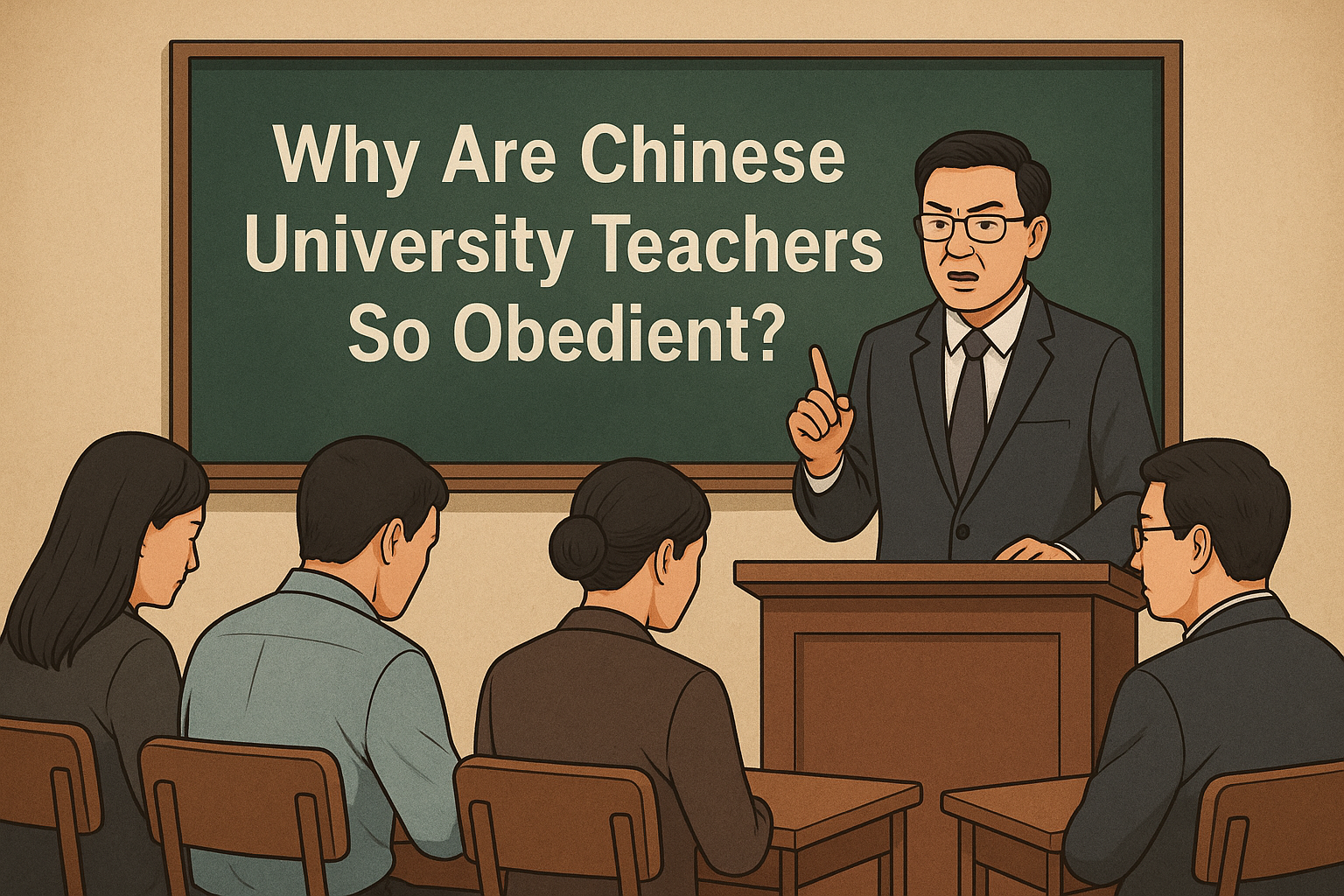
Why are Chinese university teachers considered so easy to govern?
This question was raised in a recent video on the WeChat channel Rain Falling, Zen Heart Calm (雨落禅心静) . At its core, it asks: why do university faculty appear so compliant in the face of administrative authority?
As the creator observes:
“Administrators impose one restriction after another.
Regulations are issued on a whim.
Each time they test how much teachers can endure,
they find that the bottom line is never fixed—
it can always sink lower.”
She offers three explanations. First, teachers themselves lack money and power. Second, the profession enforces tight institutional discipline. Third, university teachers have already passed a “compliance test” during their long years of postgraduate training.
The outcome, she concludes, is that when confronted with unfair treatment, teachers “often respond with surprising silence and obedience.”
The video account identifies its owner as a woman from Zhengzhou, Henan, holding both bachelor’s and master’s degrees from Wuhan University, now teaching at a university.
Over the past few years, a growing number of videos have surfaced on WeChat, voicing discontent about the education system. The tone is usually restrained, yet beneath the surface they expose deep-seated vulnerabilities.
The critical question is this: when teachers suppress their dissatisfaction with no channel for expression, what are the consequences for their work, their well-being, and the vitality of higher education itself?
Even more troubling is the absence of listeners—who is truly willing to hear the voices of teachers?
It is to be hoped that this silence will not last forever.