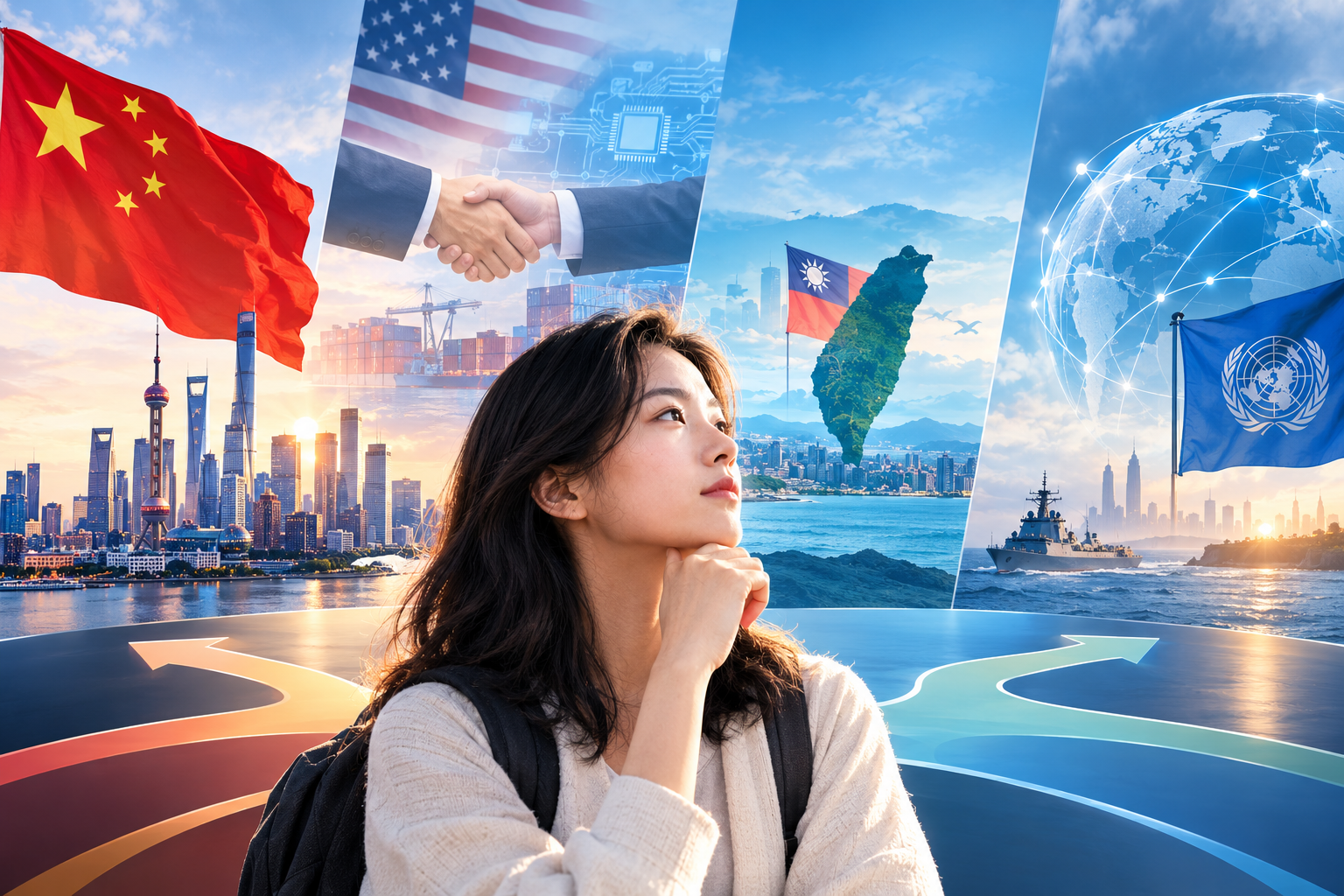
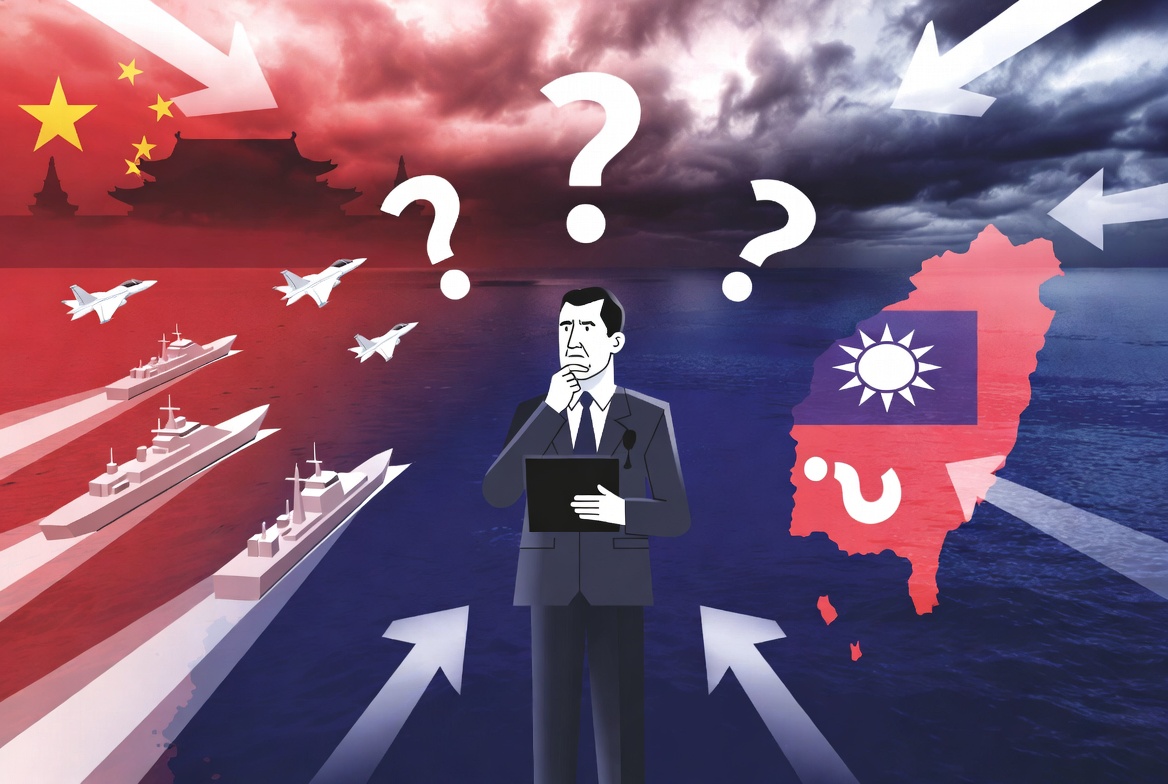
French geopolitical scholar Dominique Moïsi recently raised an attention-grabbing question: “Will Xi Jinping cross the Rubicon?”
By Bi Yantao
Published on May 30, 2026
This metaphor draws from a well-known episode in Roman history: when Julius Caesar crossed the Rubicon River with his army, he chose a path of no return.
The argument has strong communicative appeal and aligns with a common narrative pattern in Western media. However, a closer examination of its underlying logic reveals several cognitive distortions that deserve caution.
The issue is not whether the scholar supports or opposes mainland China, but that the analytical framework he represents is shaping Western understanding of the Taiwan issue in ways that may not reflect reality.
I. Personalizing a National Issue
Moïsi’s question implicitly assumes a key premise: that the Taiwan issue depends primarily on whether Xi Jinping, as an individual, chooses to make a historic decision.
This analytical approach is not uncommon in Western discourse.
In recent years, many Western commentaries have tended to interpret China’s policies through the lens of leadership personality, ambition, psychology, or political legacy, as if major state decisions are primarily driven by individual will.
However, Beijing’s official definition of the Taiwan issue has remained highly consistent over time. Regardless of leadership changes, it is framed as a matter of national reunification, sovereignty, and territorial integrity, rather than a personal political project of any single leader.
Of course, major decisions do involve leadership agency. But if the Taiwan question is primarily reduced to personal choice, one risks overlooking the deeper logic of state strategy.
When the analytical framework is distorted, the conclusions are likely to deviate from reality.
II. Taiwan Is Neither Ukraine Nor Iran
In recent years, Western strategic discourse has increasingly relied on analogical reasoning.
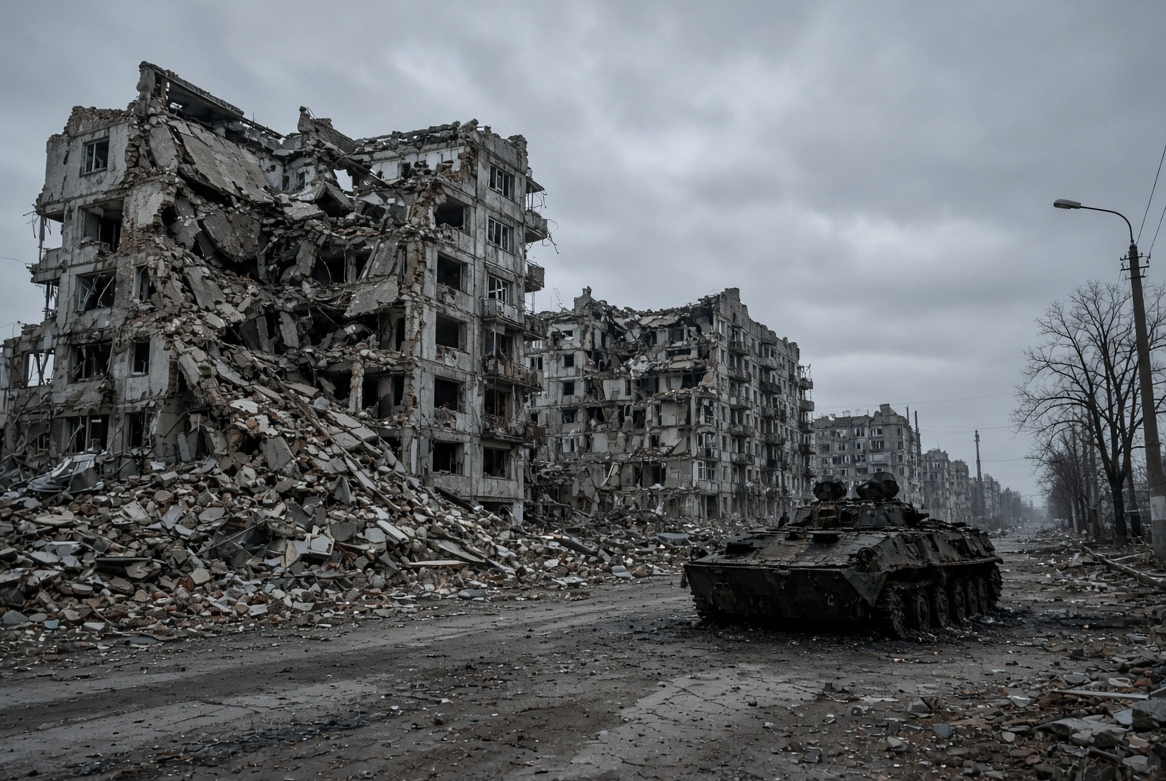
Following the outbreak of the Russia–Ukraine war, Taiwan is often described as “the Ukraine of Asia.”
Some analysts go further, linking Taiwan with Iran or the Strait of Hormuz, attempting to interpret potential future scenarios through existing cases.
This approach may enhance communicability, but it does not necessarily improve understanding.
Ukraine is a land war. Taiwan involves cross-strait military dynamics across a major body of water.
Ukraine has strategic depth and land-based supply lines; Taiwan is an island.
The importance of the Strait of Hormuz lies in its role as an energy transit chokepoint; Taiwan’s strategic value stems from its irreplaceable position in the global semiconductor supply chain.
Each case is embedded in a distinct historical and strategic environment.
Simple analogies may create a sense of familiarity, but they can obscure the uniqueness of the problem itself.
In international political analysis, the main risk is often not a lack of cases, but over-reliance on them.
III. Social Resilience Is Not a Universal Key
Moïsi also emphasizes the importance of Taiwan’s societal resilience, a concept that has become popular in Western strategic studies.
Since the Ukraine war, “social resilience” has been widely regarded as a key variable influencing conflict outcomes. Some analysts therefore assume that Taiwan could similarly rely on resilience to manage future crises.
Social resilience is indeed important. A society’s organizational capacity, psychological endurance, and sustained mobilization can all affect the trajectory of events.
However, resilience is not an independent variable. Its effectiveness depends on war conditions, strategic objectives, external support, resource flows, and the overall balance of power.
Ukraine’s resilience is notable not only because of domestic cohesion, but also because of sustained international support and geographic proximity to Europe.
Therefore, applying one conflict model directly to another requires caution.
More importantly, social resilience may influence the course of conflict, but it does not necessarily determine its outcome.
History shows that wars are ultimately shaped by a combination of political will, strategic objectives, resource mobilization capacity, and comprehensive national strength.
Treating any single factor as decisive can lead to misjudgment.
IV. A Key Overlooked Variable: How Beijing Defines Risk
Many Western analyses focus heavily on the costs of war.
Economic losses, sanctions, and military risks are all carefully calculated.
These questions are important. But a frequently overlooked issue is how Beijing itself interprets these costs.
In international politics, risk and cost are never purely objective numerical values.
They are first and foremost cognitive constructs. Different states often interpret the same risks in fundamentally different ways, and different strategic cultures may assign radically different meanings to identical costs.
Therefore, in discussing the Taiwan issue, the key question is not how the West evaluates costs, but how Beijing evaluates them.
If the two sides operate with different cognitive frameworks regarding risk, cost, and strategic objectives, then predictions built on a single framework will inevitably have limited reliability.
V. The Real Concern: Cognitive Misjudgment
My concern is not the argument made by this French scholar itself. Academic debate should allow diverse perspectives.
The real concern is that when such narratives circulate widely in media, think tanks, and policy discussions, they may gradually shape a broader Western perception of China—without sufficient understanding of Beijing’s decision-making logic.
Historical experience shows that many major crises do not originate from a lack of information, but from misinterpretation.
Each side believes it understands the other, while in fact interpreting the other through its own logic.
This is a well-known phenomenon in communication studies.
Conclusion
People do not act on reality itself, but on their perception of reality.
If perception is distorted, decisions will also be distorted.
From this perspective, the greatest risk in the Taiwan Strait may not lie purely in the military domain, but in the cognitive domain.
When more and more actors believe they understand Beijing, while in fact they do not, the seeds of miscalculation are already sown.
Understanding the other does not mean agreeing with the other, but refusing to understand often turns misjudgment into reality.
Bi Yantao is a professor at the School of International Communication and Arts, Hainan University, and a senior research fellow at the Charhar Institute. The views expressed in this article are solely those of the author and do not represent the positions of the author’s affiliated institutions.