Today, the biggest change in China’s international communication is not in the methods of communication, but in the very concept of “international communication” itself.
By Bi Yantao
Published on July 2, 2026
In recent years, a major transformation has taken place in China’s international communication field that has rarely been seriously discussed.
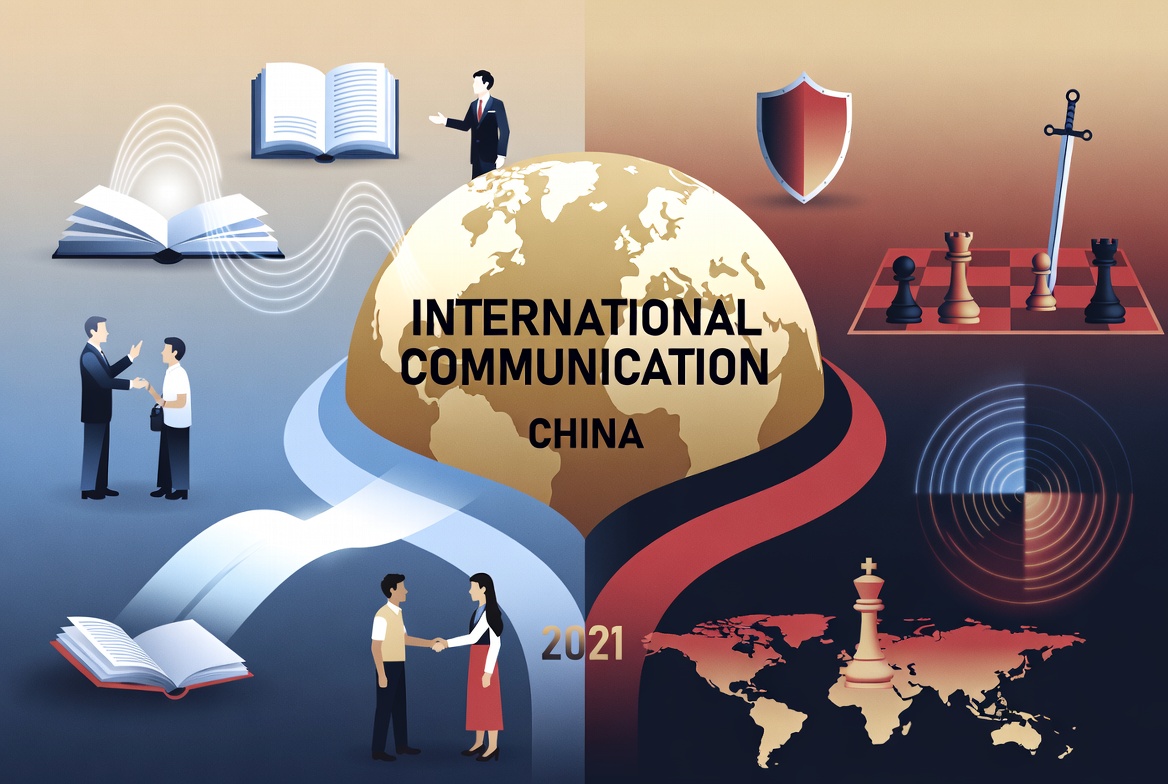
To be precise, what China refers to today as “international communication” has split into two distinct knowledge systems. The concept of “international communication” itself is now carrying two different theoretical traditions, practical logics, and policy objectives.
If this change is not promptly clarified, it will not only affect academic research but may also impact public decision-making, talent cultivation, and the public’s understanding of international communication.
I. Before 2021: International Communication Had Different Orientations but Remained Within the Same Discipline
Prior to 2021, China’s international communication field always featured two different research orientations.
One can be called the theoretical orientation. This approach focused more on international communication theory, cross-cultural communication, international journalism and communication, national image, media effects, and similar topics. Its main outputs were theoretical construction, paper publication, and research projects.
The other was the practice-oriented approach. This orientation paid greater attention to international communication effectiveness, media operations, international communication projects, and the construction of overseas communication platforms, aiming to directly address real-world problems in international communication practice.
There had long been a silent tension between the two. The practice-oriented side believed that some research was detached from actual communication work, while the academic-oriented side placed greater emphasis on theoretical system building and academic standards.
However, no matter how different they were, both belonged to the field of communication studies and shared the same basic research objects and disciplinary paradigms. They discussed communication laws, communication subjects, communication content, communication media, and communication effects — only their focus differed.
In other words, although different schools existed at that time, international communication was always about communication issues, not strategic competition.
II. After 2021: A New “International Communication” Began to Take Shape
The truly noteworthy change occurred after 2021.As international strategic competition intensified and China’s top leadership placing greater emphasis on international communication, more and more experts from other foreign-related fields began entering the international communication domain. Accordingly, the focus of discussions on international communication shifted significantly.
These “newcomers” tend to understand international communication as an important component of national strategic competition.
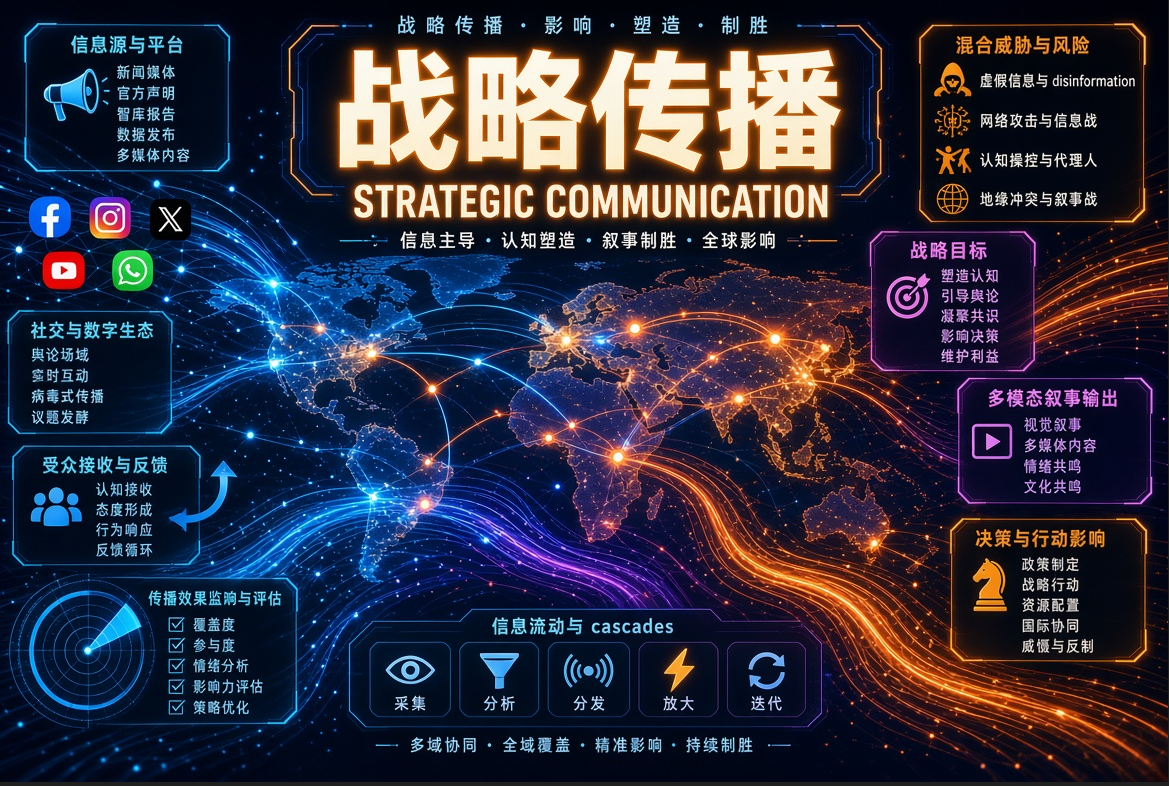
They are particularly concerned with perspectives such as cognitive warfare, information warfare, political warfare, Influence Operations, and Strategic Communications in the context of international information activities.
These topics are of course related to communication, but their intellectual sources are no longer limited to communication studies. Instead, they draw more heavily from international politics, national security, strategic studies, military science, and intelligence research.
Therefore, China today actually has two knowledge communities both operating under the banner of “international communication.”
One remains rooted in communication studies, focusing on communication laws, cross-cultural understanding, international public opinion, national image, and inter-civilizational exchange.
The other is more grounded in national security and strategic competition, focusing on cognitive advantage, narrative competition, national security, influence shaping, and international game-playing.
Both use the same concept, yet they possess different theoretical foundations, research objects, evaluation criteria, and policy objectives.
III. The Real Issue Is Not Disciplinary Intersection, But Conceptual Confusion
It must be noted that it is not inherently problematic for experts from adjacent disciplines to enter the field of international communication.
As the international environment becomes increasingly complex, strengthening the intersection between communication studies and international politics/security studies is a normal trend in global academic development.
What truly deserves attention is that the conceptual boundaries have begun to blur.
International communication in the communication studies sense primarily addresses how to promote information flow, meaning construction, and mutual understanding between different countries and cultures.
International communication within the strategic competition framework focuses more on how to shape international cognition, compete for discursive advantage, safeguard national security, and serve national strategy.
The two have overlaps, but they are not the same.
If two different knowledge systems continue to use the single concept of “international communication” without necessary conceptual distinction, it easily leads to a situation in which people discussing “international communication” are no longer actually discussing the same thing.
Disciplinary intersection should be encouraged; conceptual confusion should be treated with caution.
IV. This Conceptual Differentiation Is Producing Far-Reaching Impacts
Changes in concepts are never merely academic issues — they ultimately affect reality.
First, it may influence public decision-making.
International communication in the communication studies sense focuses on enhancing understanding, reducing misunderstandings, and improving international cognition.
International communication in the strategic competition framework focuses more on competing for cognitive advantage, safeguarding national interests, and enhancing strategic competitiveness.
Both have practical significance, but their goals, evaluation criteria, and policy design logics differ. If decision-makers fail to recognize this distinction, they may conflate two different knowledge systems.
Second, it is affecting talent cultivation.
In recent years, many university courses on international communication have increasingly incorporated content on national security, cognitive warfare, political warfare, and strategic competition.
While this content has important practical value, if students consequently form the impression that international communication equals cognitive warfare, national rivalry, or strategic competition, then the knowledge systems long accumulated in communication studies — such as cross-cultural communication, international journalism, audience research, and communication ethics — risk being gradually marginalized.
This impact is not merely a change in course content, but potentially a transformation in disciplinary cognitive structure.
Finally, it is also influencing the general public.
In recent years, international communication has increasingly been linked to national security. As a result, some members of the public have mistakenly come to believe that international communication is inherently a tool of national competition.
In fact, international communication can serve national strategy, but it has always been a discipline that studies communication laws, promotes cross-cultural understanding, and advances civilizational exchange. If only one understanding is retained while the other is neglected, the concept of “international communication” itself will become increasingly narrow.
V. China Must First Clarify the Concept of “International Communication”
Today, an important task facing China’s international communication is not only to explain China to the world, but also to re-explain “international communication” itself.
A country can certainly assign more national security functions to international communication and promote deep integration between communication studies and international politics, strategic studies, and security studies.
However, the premise is that it should clearly articulate the theoretical sources, research objects, and practical objectives of the different knowledge systems, rather than letting them continue to share the same concept while carrying entirely different meanings.
The clearer the concepts, the more effective the academic discussions; the clearer the boundaries, the more precise the policy formulation; the more transparent the knowledge systems, the better-directed the talent cultivation.
In this sense, one of China’s greatest international communication challenges today no longer exists only between China and the world, but has also begun to exist within China itself — in the understanding of the concept of “international communication.”
If even a basic consensus on what “international communication” actually is has not been formed, then the large volume of discussions surrounding it will likely amount to nothing more than different knowledge systems talking past each other.
International communication must first clarify its own conceptual system. Only with conceptual clarity can the discipline develop healthily; only with conceptual clarity can policy discussions be built on a common knowledge foundation.
I believe that promptly explaining to the international community that China has developed two “international communication” knowledge systems is itself a very important piece of international communication work.
Bi Yantao is a professor at the School of International Communication and Arts, Hainan University, and a senior researcher at the Charhar Institute. His main research areas are international communication, international conflict, and peace. This article represents only the author’s personal views and does not represent the position of his affiliated institutions.