
Promoting Understanding through Communication and Advancing World Peace through Cognitive Mediation
By Bi Yantao
Published on July 26,2026
The Constitution of UNESCO begins with the following declaration: “Since wars begin in the minds of men, it is in the minds of men that the defenses of peace must be constructed.”
By Bi Yantao
Published on July 26,2026
This profound insight reveals the intellectual roots of war and peace. Ultimately, wars often emerge from long-term accumulations of misunderstanding, alienation, and hostility between individuals, groups, and societies.
Therefore, maintaining peace requires not only political, security, and diplomatic mechanisms, but also the cultivation of foundations for peace in the realms of human thought, cognition, culture, and communication.
Communication plays a particularly important role in this process.
Communication is not merely a process of transmitting information; it is also a process of building relationships of understanding among people. Effective communication can reduce misunderstandings, overcome divisions, and foster trust, while an imbalanced communication environment may reinforce prejudice, solidify antagonism, and even intensify conflicts.
Based on this understanding, since its establishment, Communication Without Borders (CWB) has consistently focused on international communication, civilizational exchange, cognitive differences, and global peace issues. It is committed to exploring how communication can promote understanding, connect different societies, and create conditions for peacebuilding.
I.The Core Mission of Communication: Promoting Understanding Rather Than Merely Disseminating Information
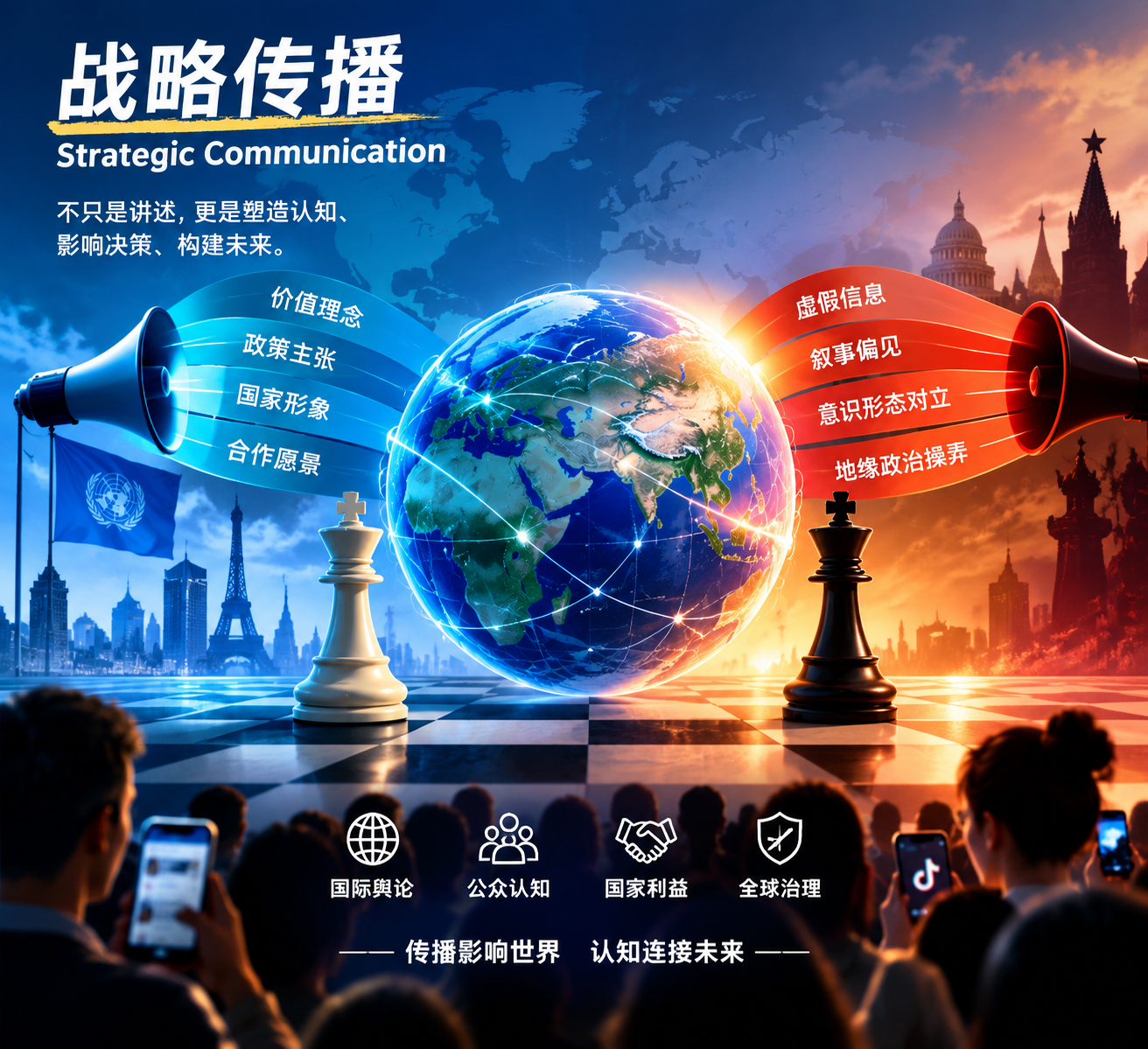
In an era of rapid information flows, humanity’s challenge is no longer a lack of information, but a lack of understanding.
Different countries, civilizations, and social groups often possess different historical experiences, value systems, and perceptions of reality. The same event or piece of information may generate entirely different interpretations among different communities.
When such cognitive differences lack effective communication, they can easily develop into misunderstanding, distrust, hostility, and confrontation.
Therefore, the deeper mission of communication should not simply be to expand influence, but to promote mutual understanding among different actors.
A truly valuable communication practice should not only ask, “How can we make others hear us?” but also ask, “How can different people come to understand one another?”
This is precisely the public value that Communication Without Borders seeks to explore.
II. Cognitive Disembedding: A Communication Approach for Promoting Understanding
Many conflicts in modern society do not arise solely from irreconcilable interests; they also result from different actors being deeply embedded within their own cognitive frameworks.
Individuals, groups, and societies are often shaped by their historical memories, identities, cultural experiences, and information environments, forming relatively stable cognitive structures.
When different cognitive structures lack meaningful interaction, a situation may emerge in which people “only see themselves but fail to see others.”
In response to this challenge, Communication Without Borders has proposed the concept of “cognitive disembedding” as an approach to promoting understanding.
Cognitive disembedding does not require people to abandon their own positions or values. Rather, it encourages individuals and groups, while maintaining their own identities and judgments, to temporarily step outside their established cognitive frameworks and seek to understand others through a more open perspective.
This approach can help different actors recognize the limitations of their own perceptions, understand diverse social experiences, reduce simplistic judgments, and create possibilities for dialogue.
In this sense, cognitive disembedding is not only a method of cognitive mediation, but also an important pathway for peace communication.
III. From Communication Practice to Peace Practice
For a long time, peace studies have focused primarily on the causes of war, mechanisms of conflict, and theories of peace, while peace practice has largely been undertaken by governments, international organizations, and specialized institutions.
However, increasing experience has demonstrated that peace requires not only political negotiations and institutional arrangements, but also transformations in social cognition.
If conflicting parties cannot understand one another, even agreements that are reached may struggle to produce lasting peace.
Therefore, peacebuilding requires greater participation from knowledge communities. Peace scholars, communication researchers, and social practitioners should not only serve as observers and analysts of peace issues; they can also become participants in and facilitators of peace processes.
The practical logic of Communication Without Borders has emerged within this context.
Through intercultural dialogue, international communication research, and cognitive mediation practices, Communication Without Borders seeks to build bridges of understanding among different societies and contribute to reducing cognitive divides and promoting peaceful dialogue.
IV. The Mission of Communication Without Borders: Building a Platform for Understanding and Dialogue
Communication Without Borders is not simply an information-distribution platform; it is an open platform dedicated to fostering understanding.
Looking ahead, Communication Without Borders will continue to promote:
First, facilitating communication among different countries, civilizations, and societies in order to reduce misjudgments caused by a lack of understanding.
Second, exploring the role of communication in conflict prevention, peacebuilding, and international understanding.
Third, connecting global knowledge communities and providing a space for exchange among peace scholars, communication researchers, and practitioners.
Fourth, studying new transformations in communication brought about by artificial intelligence and exploring how to build a healthier, more open, and more rational global cognitive environment.
Conclusion: Making Communication a Force for Peace
If war originates in human thought, then peace can also gradually emerge through thought, understanding, and dialogue.
Communication connects people; understanding connects societies.
In an era marked by increasing cognitive fragmentation and growing international uncertainty, Communication Without Borders will continue to explore the peaceful value of communication: Promoting understanding through communication, reducing conflict through understanding, and advancing peace through cooperation.
This is the long-term mission of Communication Without Borders.
Author: Bi Yantao is the Editor-in-Chief of Communication Without Borders and a professor at the School of International Communication and Arts, Hainan University.