
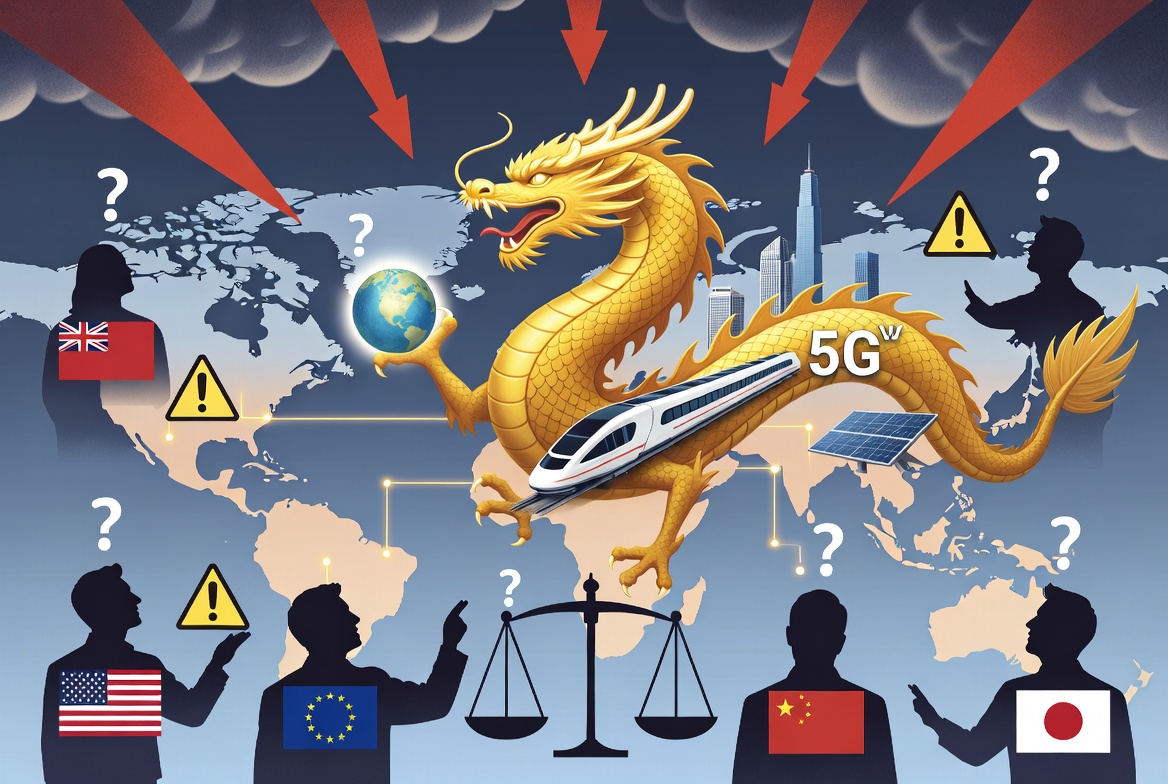
China’s rising global influence — in economy, technology, infrastructure, and international affairs — has triggered concern and vigilance in certain countries. This anxiety stems not solely from external biases or China’s own shortcomings, but from the complex interaction of the international system, communication dynamics, and China’s domestic characteristics.
By Bi Yantao
Published on June 10, 2026
1. International System: Power Shifts Naturally Cause Concern
Any major power’s rapid rise disrupts the existing order. As China’s economic, technological, and diplomatic weight grows, it inevitably challenges the current distribution of benefits and rule-making authority. This is not unique to China: Britain worried about Germany’s rise in the 19th century, the U.S. felt anxious about Japan in the 20th century, and other nations have been uneasy about America’s post-Cold War dominance.
Such concerns often reflect real interests — adjustments in global supply chains, technology, finance, and rules can create winners and losers. Cultural, institutional, and strategic differences further amplify uncertainty. States fear not only known threats but especially unpredictable futures. Thus, power transition, interest competition, and security anxiety form the structural foundation of these worries.
2. Media and Cognitive Factors: The “China” People See Is Often Mediated
International perceptions of China are shaped not only by reality but by narratives. Many Western observers interpret China through historical templates of rising powers challenging the status quo. Media logic favors conflict, risk, and friction over routine cooperation, making trade disputes or military drills far more visible than infrastructure projects.
Competitors actively promote “China Threat” narratives. Through repeated media coverage, think-tank reports, and political speeches, a constructed image of threat can become entrenched in public consciousness. Consequently, some countries react less to the real China than to an amplified, risk-laden version of it.
3. China’s Own Factors: Influence Grows Faster Than Understanding
China faces significant “cognitive distance” due to differences in language, culture, institutions, and social systems. Many Chinese policy concepts and strategic ideas are not easily understood abroad. Rapid development — unprecedented in speed and scale — outpaces other nations’ ability to comprehend it.Additionally, China’s international communication capacity has lagged behind its actual influence, leaving room for misunderstandings and speculation to flourish.
4. Interacting Factors These elements do not operate in isolation.
Interest competition fuels threat narratives; narratives heighten anxiety; anxiety influences policy; and policy intensifies competition. Cognitive gaps amplify uncertainty, which media and politics then magnify.
5. Understanding the Mechanism Matters More Than Debate
A country’s international image is co-created through continuous interaction — partly self-shaped, partly shaped by others. For China, the key task is not merely to refute “threat” accusations, but to deeply understand how international perceptions form.
Only by grasping the sources of concern can China respond effectively, reduce misunderstandings, and improve communication. The real challenge ahead is not just growing stronger, but helping the world better understand that growing strength.
The full version of the essay in Chinese is here.
Author: Bi Yantao, Professor at Hainan University and Senior Researcher at the Charhar Institute. (This article represents the author’s personal views only.)